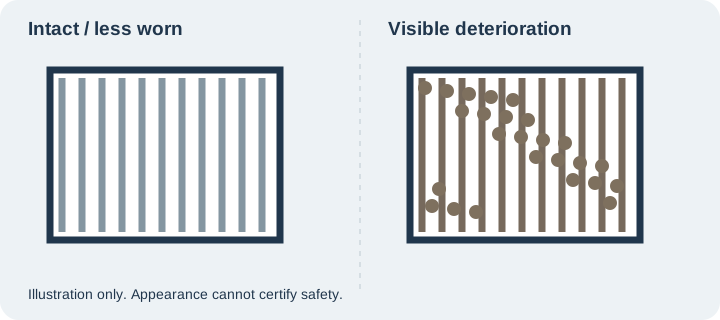
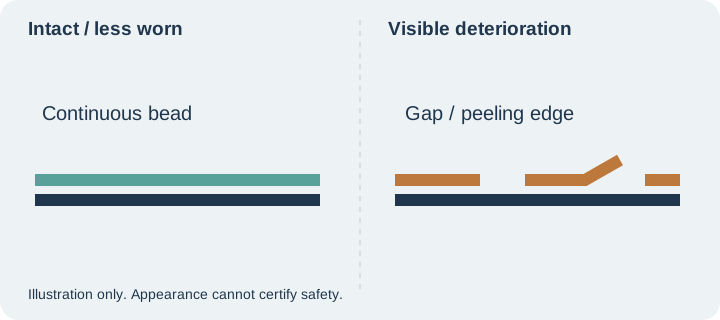
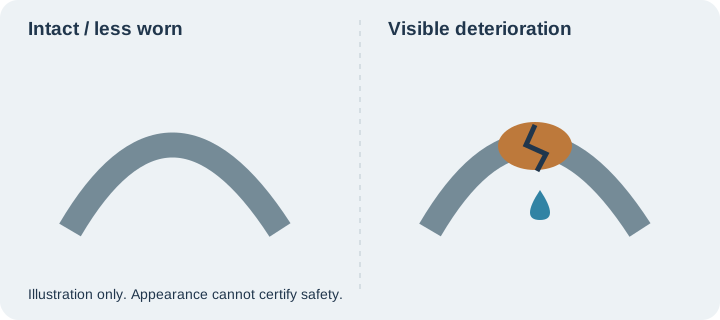
Open each labeled part for its role and the safe stopping point. This is a conceptual cutaway, not a construction or drilling plan. The interior finish hides the cavity. Its appearance does not tell you where services run. Do not cut, drill or sand unknown materials until risks have been assessed. Studs support the wall assembly, but a stud finder is not proof that a drilling path is free of cables or pipes. Structural changes need qualified design and approval. Insulation, air barriers and vapor retarders have different jobs. Their location and vapor resistance depend on climate and the complete wall assembly. Do not add plastic simply because this drawing shows a moisture layer. Power may cross a cavity horizontally or vertically. Some homes use cable; others use conduit. A surface switch or detector cannot prove a concealed circuit is de-energized. Pipe routes and materials vary. A wall may also contain gas lines and other services not shown. A clear-looking cavity is not permission to cut. Reference: EPA remodeling and moisture guidance. For known or suspected lead/asbestos, read pre-renovation precautions. Illustrations compare visible conditions. These are not customer photos, laboratory results or a safety diagnosis. An apparently intact component can still fail. A clean-looking pleated filter versus visible dust loading. Color alone does not determine replacement; follow the specified filter type and inspection interval. A continuous seal versus a gap and peeling edge. Staining may have several causes; a new bead cannot correct movement or hidden water damage. An intact visible surface versus a bulge and seepage. Stop use when damage is found; appearance cannot establish the condition inside an old hose. A clear channel versus debris and overflow. Observe from safe ground access; arrange qualified cleaning where height or access creates risk. A less-consumed rod versus substantial material loss. This is an illustration of wear, not a universal replacement threshold. A professional must use the exact heater manual; do not remove a hot, pressurized rod to compare it.What’s inside your wall?
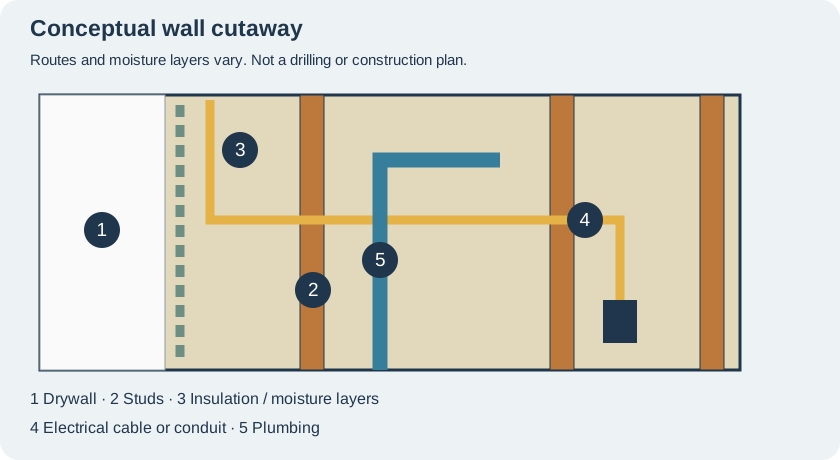
1. Drywall
2. Studs
3. Insulation and moisture layers
4. Electrical cable or conduit
5. Water and drain pipes
Condition comparison gallery
HVAC filter
Tub sealant
Washing-machine hose
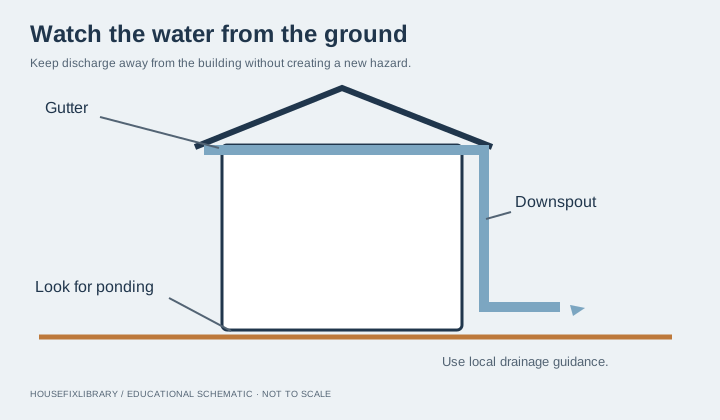
Gutter flow
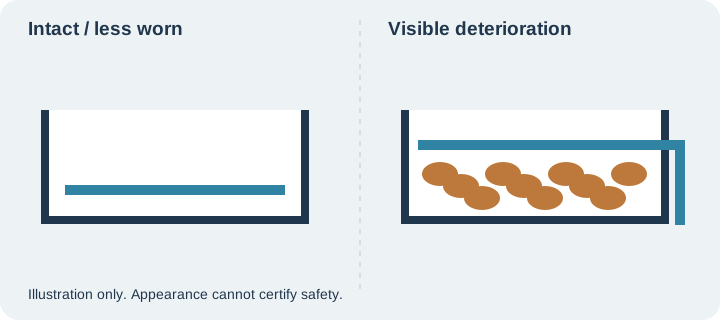
Sacrificial water-heater anode
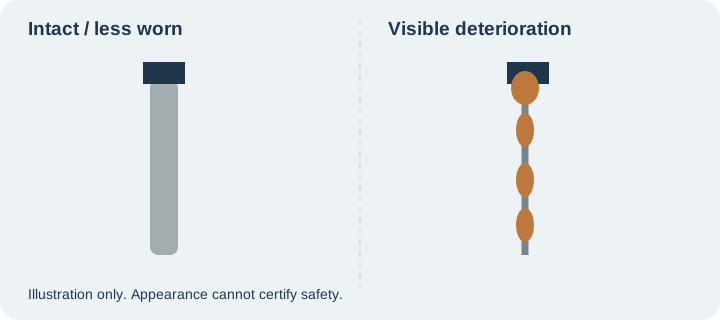
These drawings explain concepts. They do not replace a model-specific installation drawing or a qualified inspection.
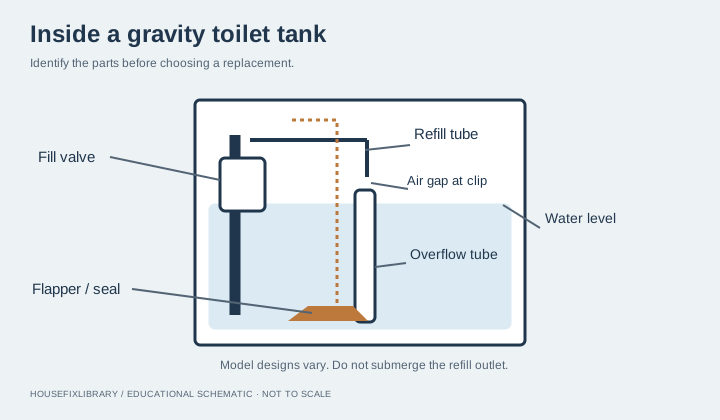
Why your toilet keeps running
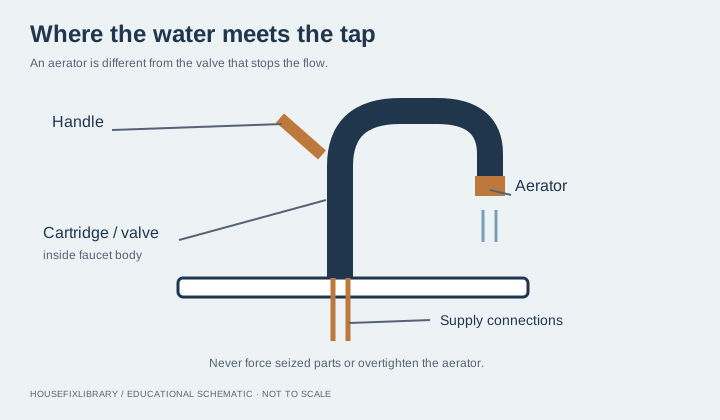
How to clean a faucet aerator
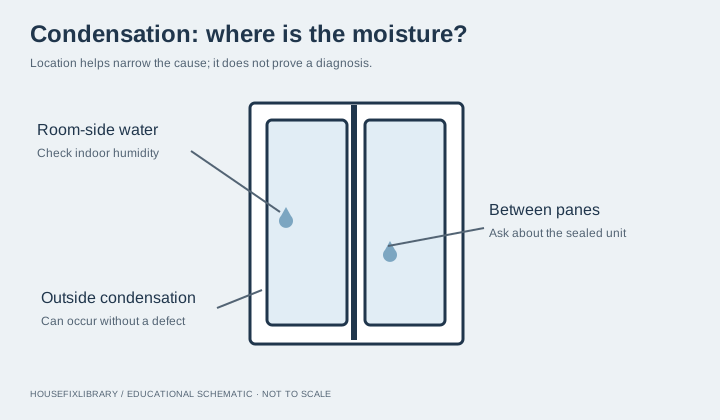
Why water forms on your windows
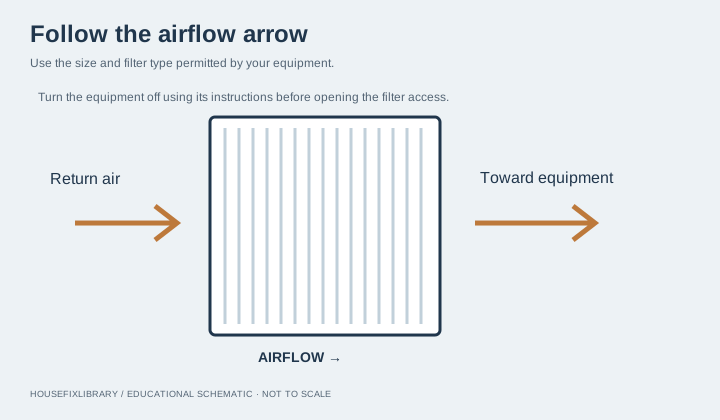
Replace an accessible HVAC air filter
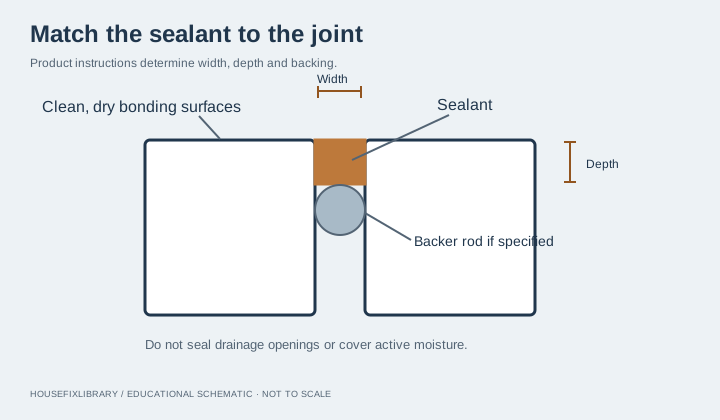
Replace failed caulk around a tub or shower
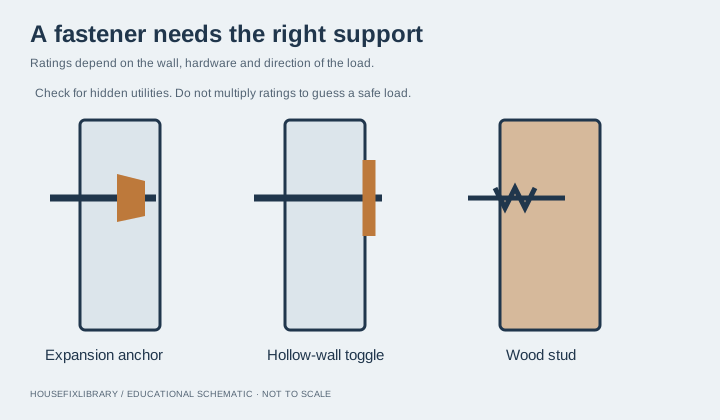
Choose a wall anchor for the actual load
Check where downspout water goes
Test and maintain your smoke alarms