
A supply hose can deteriorate at its body or connections. A visual check cannot guarantee that it will not fail, but bulges, corrosion, kinks and moisture are reasons to act. Replacement intervals should follow the washer and hose manufacturers.
In this guide
Tools and preparation
- Flashlight.
- A dry cloth for accessible surfaces.
- The washer’s installation.
- Hose instructions.
Time is a planning estimate, not a timed field test. Material prices vary; check the correct parts and local prices before buying.
Steps and safe checks
1. Check access and valve condition
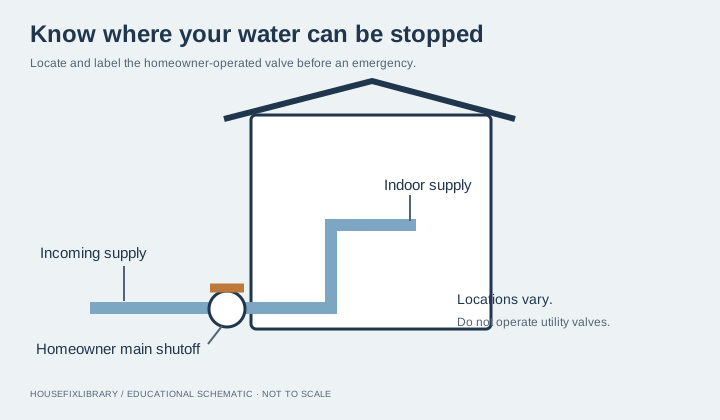
Locate the homeowner-operated washer shutoffs without forcing them. If they are seized, corroded or inaccessible, arrange service before attempting hose replacement. Protect yourself from trapped spaces and appliance movement.
2. Inspect visible hose lengths
Look for bulging, cracking, abrasion, cuts and sharp bends. Check where the hose touches the wall or appliance. Do not pull it taut to see a hidden section.
3. Look at connections
Observe accessible fittings for fresh moisture, staining and corrosion. A dry cloth can help reveal active dampness without loosening the connection. Do not overtighten a fitting as a universal cure.
4. Record age and plan replacement
Check the maker’s interval and any installation date. Whirlpool guidance commonly specifies five-year inlet-hose replacement for the models covered, but verify your own model and hose instructions. A damaged hose needs attention sooner.
Check the result
Any visible deterioration or leakage requires corrective action. A clean visual inspection is not a pressure test and does not establish the remaining life of an old hose.
Common mistakes
Avoid reusing damaged washers, substituting an unapproved hose or replacing only one deteriorated component while ignoring a corroded shutoff.
When to call a professional
Use a plumber or appliance installer for inaccessible valves, active leaks, heavy appliance movement, damaged threads or uncertain hose compatibility.
What can happen if you postpone it?
A visibly damaged supply hose can leak and wet nearby rooms. A passing visual check does not guarantee hidden hose condition; follow the replacement instructions.
Prevent a repeat
Record replacement dates, maintain the manufacturer’s routing and clearance, and include visible connections in routine leak checks.
Sources and scope
Source check: November 4, 2026. AI-assisted educational writing checked against the linked documentation; no firsthand testing or licensed professional review is claimed. Manufacturer instructions and applicable local requirements take priority.