
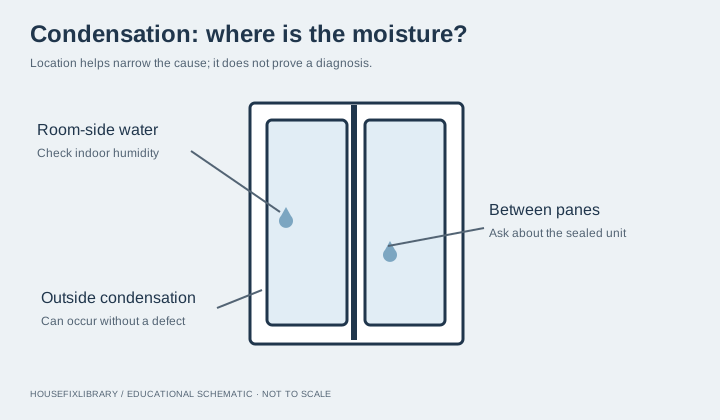
Condensation forms when moist air meets a sufficiently cool surface. Water on the room side, outside face or inside a sealed glass unit has different implications. Wiping the visible moisture is useful, but it does not identify the underlying reason.
In this guide
Tools and preparation
- Soft cloth.
- Humidity meter if available.
- Notes on weather.
- Room use.
- Which glass surface is wet.
Time is a planning estimate, not a timed field test. Material prices vary; check the correct parts and local prices before buying.
Steps and safe checks
1. Identify the surface
From safe access, check whether a cloth removes the moisture from the room-facing pane. If neither accessible surface can be wiped clear and the fog is between panes, ask the window maker about the sealed unit.
2. Record the conditions
Note whether it happens overnight, after showers or cooking, or during a weather change. Compare rooms. A humidity reading is useful context, but a single number is not a complete assessment of ventilation or window performance.
3. Reduce avoidable moisture
Use functioning kitchen and bathroom exhaust systems as intended and avoid blocking designed airflow. Deal with leaks and indoor moisture sources. Do not seal a required vent to make the room feel warmer.
4. Protect and reassess
Wipe accumulated water and dry the sill. Recheck after changes in room use and ventilation. Look for staining or damage to adjacent materials, which may indicate a problem beyond surface condensation.
Check the result
Less room-side moisture after improved moisture control supports condensation as a factor. Persistent wetness, leaks during rain or between-pane fog requires another assessment.
Common mistakes
Do not call every wet window a failed seal. Exterior condensation can occur without a defect, while between-pane moisture cannot be wiped away from the room.
When to call a professional
Contact the window manufacturer or installer for sealed-unit fog, damaged frames or rain leakage. Get help for persistent dampness or suspected mold in surrounding materials.
What can happen if you postpone it?
Persistent condensation can wet adjacent finishes. Wiping the glass alone will not address the humidity, ventilation or glazing condition that allows it to recur.
Prevent a repeat
Keep ventilation working and watch indoor moisture, especially during cold weather. Inspect sills regularly so water does not remain against vulnerable finishes.
Sources and scope
- Andersen: Product, Care and Maintenance Information
- EPA: A Brief Guide to Mold, Moisture and Your Home
Source check: November 4, 2026. AI-assisted educational writing checked against the linked documentation; no firsthand testing or licensed professional review is claimed. Manufacturer instructions and applicable local requirements take priority.