
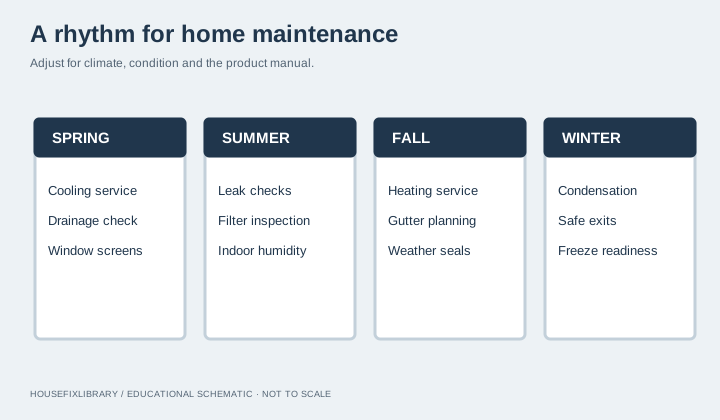
Winter maintenance focuses on safe operation and early signs of moisture or freezing. A draft, a wet window and a cold pipe are different symptoms. Avoid improvised repairs that block ventilation or introduce a heating hazard.
In this guide
Tools and preparation
- Alarm.
- Equipment manuals.
- Weather information.
- A household emergency plan.
Stay within safe indoor and ground-level access.
Time is a planning estimate, not a timed field test. Material prices vary; check the correct parts and local prices before buying.
Steps and safe checks
1. Observe indoor moisture
Check window surfaces and accessible damp areas. Wipe accumulated water and use ventilation as intended. Persistent condensation may need changes in moisture control or a professional assessment.
2. Keep systems operating as intended
Inspect accessible filters and note unusual heating behavior. Do not cover required vents, bypass controls or use unapproved portable heat sources as a repair for faulty equipment.
3. Review freeze readiness
Confirm that outdoor water preparations match the faucet design. Know the main shutoff and plumber contact. If a pipe appears frozen or damaged, follow professional guidance rather than using an open flame.
4. Maintain safe exits and alerts
Keep routes clear, check alarms on schedule and review weather warnings. Store essential information where household members can reach it during an outage without relying entirely on a powered device.
Check the result
The home should have a clear plan for heating faults, leaks and alarms. Recurring moisture or a changing crack should remain on the follow-up list until its cause is resolved.
Common mistakes
Avoid sealing combustion-air paths, thawing pipes with a torch or treating a quiet CO alarm with an expired sensor as adequate protection.
When to call a professional
Use emergency services for alarms or immediate danger, and qualified tradespeople for heating faults, frozen or burst pipes and unsafe drainage or ice problems.
What can happen if you postpone it?
Ignoring winter condensation or a frozen-pipe warning can allow water damage to develop. Unsafe roof or ice access should be handled by suitable professionals.
Prevent a repeat
Keep records of winter trouble spots so spring maintenance can address causes. Update supplies and contacts when household needs change.
Sources and scope
- American Red Cross: Preventing Frozen Pipes
- Consumer Product Safety Commission: Carbon Monoxide Fact Sheet
- EPA: A Brief Guide to Mold, Moisture and Your Home
Source check: November 4, 2026. AI-assisted educational writing checked against the linked documentation; no firsthand testing or licensed professional review is claimed. Manufacturer instructions and applicable local requirements take priority.