
Carbon monoxide cannot be detected by smell. A CO alarm and a smoke alarm detect different hazards, even when combined in one unit. Know the model’s emergency pattern, low-battery indication and end-of-life signal before you need to interpret them.
In this guide
Tools and preparation
- The CO alarm manual.
- Model.
- Age information.
- Approved replacement batteries only where specified.
Time is a planning estimate, not a timed field test. Material prices vary; check the correct parts and local prices before buying.
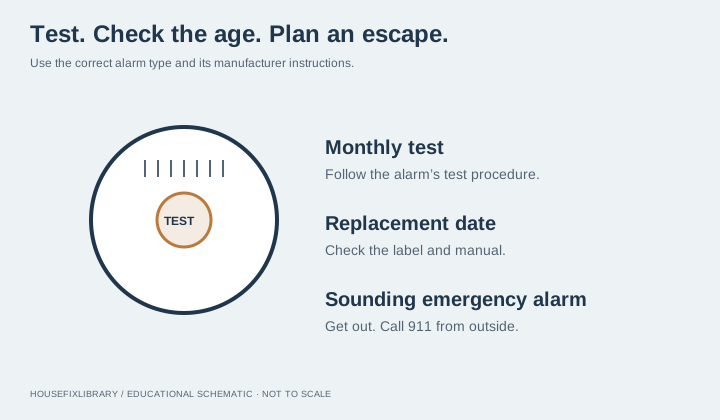
Steps and safe checks
1. Record the model and age
Find the replacement interval in the manual or on the label. CO alarm lifetimes vary; do not automatically apply a smoke alarm’s replacement period.
2. Test as instructed
Use the test button at the recommended interval; CPSC recommends monthly tests. Its fact sheet explains that the button checks circuitry, not the accuracy of the sensor. Do not generate CO to test the unit.
3. Check power and placement
Replace only user-serviceable batteries with approved types. Follow placement instructions and local requirements. Keep the alarm uncovered and arrange qualified help for hardwired work.
4. Plan the emergency response
Make sure everyone knows to leave promptly on an emergency alarm and call from outside. If authorities identify a faulty appliance, do not use it again until trained personnel have serviced it.
Check the result
Routine checks should match the manual’s expected response. An end-of-life indication means replacement is needed; it is not fixed by repeatedly changing batteries.
Common mistakes
Never dismiss an emergency alarm because nobody feels ill, unplug it to stop the noise or return indoors to retrieve belongings.
When to call a professional
Use emergency services for a sounding CO alarm. Arrange qualified fuel-appliance service and professional alarm installation when required.
What can happen if you postpone it?
An expired or failed CO alarm cannot be relied on for warning. It is also no substitute for safe operation and inspection of fuel-burning equipment.
Prevent a repeat
Maintain fuel-burning equipment professionally, keep alarms working and never operate generators, grills or other unsafe combustion sources indoors.
Sources and scope
Source check: November 4, 2026. AI-assisted educational writing checked against the linked documentation; no firsthand testing or licensed professional review is claimed. Manufacturer instructions and applicable local requirements take priority.