
Spackle and joint compound overlap in appearance, but their intended jobs differ. Small dents and nail holes often suit spackle. Taping drywall seams and broader finishing generally call for a compatible joint-treatment system. The label is more reliable than the tub’s color.
In this guide
Tools and preparation
- Product labels.
- A photo of the damage.
- A ruler.
Read the manufacturer’s approved surfaces, depth limits and coating instructions.
Time is a planning estimate, not a timed field test. Material prices vary; check the correct parts and local prices before buying.
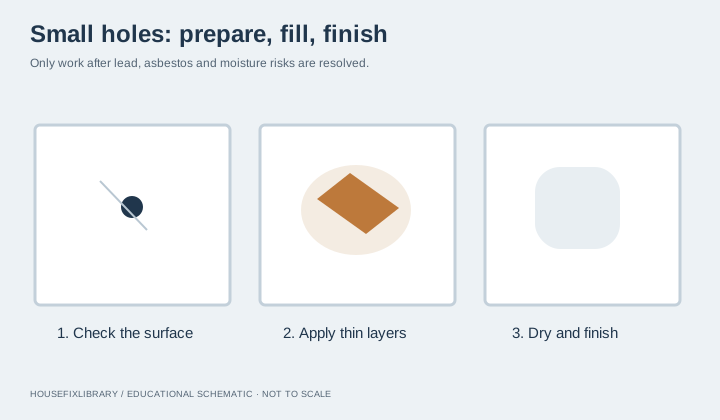
Steps and safe checks
1. Define the damage
Distinguish a shallow dent from a through-hole, loose seam or damaged panel. Measure the repair without disturbing unknown material. Larger holes may require a patch or backing rather than extra filler.
2. Read the application limits
Check the approved substrate, maximum repair size and layer thickness. A fast-drying product is not automatically suitable for a deep cavity, an exterior surface or a wet area.
3. Plan the finishing system
Read drying, sanding and priming requirements together with the paint instructions. Some ready-mixed products dry by evaporation; other products set chemically. Do not treat their working and drying times as interchangeable.
4. Buy for the actual job
Choose a practical package size and compatible tools. Ask the manufacturer or supplier about an uncertain repair rather than combining products whose compatibility has not been established.
Check the result
The chosen product should explicitly cover the substrate and repair size, with a clear path from preparation through paint. If any part is unclear, pause before opening the wall.
Common mistakes
Do not fill a moving joint with a rigid cosmetic compound, use interior-only products outdoors or confuse a dry surface with readiness for a heavy next coat.
When to call a professional
Use qualified help for repeated seam failure, loose plaster, broad damage and walls with moisture or structural concerns. Ask about hazardous materials before any sanding.
What can happen if you postpone it?
A product used beyond its specified depth or surface limits can shrink, crack or fail to adhere. The right repair system can avoid repeated filling and sanding.
Prevent a repeat
Keep leftover material sealed as instructed and label the purchase date. Hardened, contaminated or out-of-date material can make a simple repair harder.
Sources and scope
Source check: November 4, 2026. AI-assisted educational writing checked against the linked documentation; no firsthand testing or licensed professional review is claimed. Manufacturer instructions and applicable local requirements take priority.