
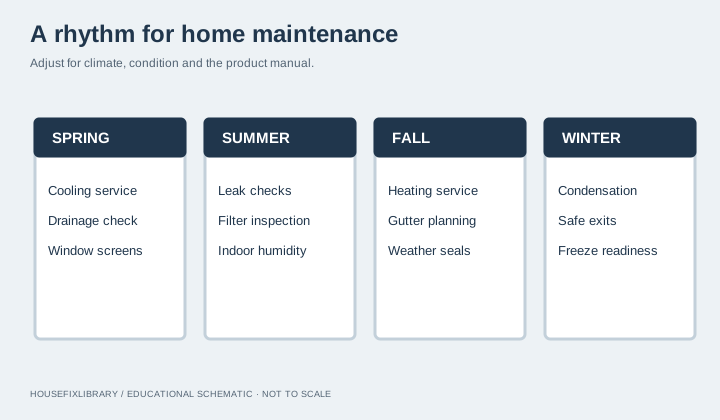
Summer routines often put more demand on cooling and outdoor water use. The useful maintenance habit is to compare current performance with normal operation and investigate unexplained changes. Extra use can explain some changes, but it should not conceal a leak.
In this guide
Tools and preparation
- Equipment manuals.
- A flashlight.
- Usage records.
- Notes on indoor conditions.
Plan outdoor observation for safe temperatures and weather.
Time is a planning estimate, not a timed field test. Material prices vary; check the correct parts and local prices before buying.
Steps and safe checks
1. Check airflow and filters
Follow the model’s filter-inspection procedure and keep supply and return paths clear. Note rooms that have become uncomfortable. Do not close many vents to force cooling into one room.
2. Review water use
Look for fresh moisture at accessible fixtures and appliance connections. Compare usage with weather and household activity. If use remains unexplained, plan a safe no-use meter check.
3. Watch persistent moisture
Note condensation, musty smells or recurring dampness. Use bathroom and kitchen ventilation as intended and correct leaks. Do not cover a wet area with paint or sealant.
4. Inspect outdoor circulation and drainage
From safe ground, look for debris around equipment where the maker requires clearance, obstructed downspout outlets and trip hazards. Do not reach through guards or pressure-wash equipment without approved instructions.
Check the result
Record changes and whether they improve after safe routine maintenance. Persistent poor cooling or dampness needs diagnosis rather than repeated resets.
Common mistakes
Avoid assuming higher utility use is always normal, adding refrigerant yourself or using strong chemicals to mask moisture odors.
When to call a professional
Use HVAC service for equipment faults, a plumber for inaccessible leaks and suitable remediation help for extensive moisture damage.
What can happen if you postpone it?
Heat and humidity can expose airflow or moisture problems. Repeatedly changing controls without a record can make a developing fault harder to describe.
Prevent a repeat
Keep routine checks short and regular, retain service records and revisit trouble spots after heavy rain or peak cooling use.
Sources and scope
- ENERGY STAR: Clean Heating and Cooling
- EPA WaterSense: Home Maintenance
- EPA: A Brief Guide to Mold, Moisture and Your Home
Source check: November 4, 2026. AI-assisted educational writing checked against the linked documentation; no firsthand testing or licensed professional review is claimed. Manufacturer instructions and applicable local requirements take priority.