
Cooling problems can come from settings, airflow, environmental conditions or equipment faults. A running fan does not prove the refrigeration system is working. Limit homeowner checks to normal controls and safe, accessible maintenance.
In this guide
Tools and preparation
- Thermostat instructions.
- Flashlight.
- A record of symptoms.
Check safely from outside the equipment enclosure.
Time is a planning estimate, not a timed field test. Material prices vary; check the correct parts and local prices before buying.
Steps and safe checks
1. Confirm the cooling request
Check the thermostat mode, setpoint and any programmed schedule. Note an error or delay indication and follow the model guidance rather than repeatedly switching the system off and on.
2. Check airflow conditions
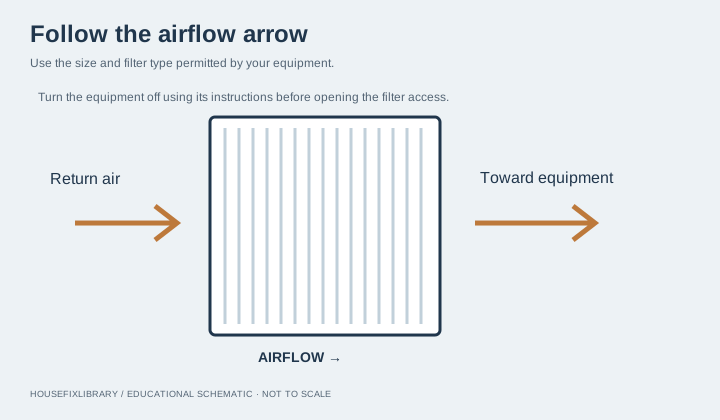
Look for blocked return grilles and inspect the user-accessible filter using its safe shutdown procedure. Do not run without a filter or assume that a new filter fixes every cooling fault.
3. Observe the outdoor unit from a distance
Look for accumulated leaves or obvious obstruction around the unit without opening it or reaching through guards. Use the manufacturer’s clearance instructions; do not invent a universal clearance for every installation.
4. Record what persists
Note indoor conditions, outdoor weather, sounds, error messages and when cooling changed. If safe basic checks do not explain it, arrange qualified service rather than opening the refrigerant circuit or repeatedly resetting protective devices.
Check the result
The system should cool in its normal operating pattern. Continuing warm air, icing, abnormal noise or leakage requires service even if the fan still runs.
Common mistakes
Avoid adding refrigerant from a DIY kit, pressure-washing coils without instructions or bypassing safety switches.
When to call a professional
Call an HVAC professional for refrigerant, electrical diagnosis, persistent condensate leakage, ice buildup or failure after the safe checks.
What can happen if you postpone it?
Continuing to run a system that repeatedly ices or shuts down can delay diagnosis. Safe external observations help a technician without exposing you to internal components.
Prevent a repeat
Arrange pre-season professional maintenance and keep routine filter and external-clearance checks up to date.
Sources and scope
Source check: November 4, 2026. AI-assisted educational writing checked against the linked documentation; no firsthand testing or licensed professional review is claimed. Manufacturer instructions and applicable local requirements take priority.