
Spring maintenance is a way to notice changes after winter, not a requirement to replace parts on a fixed date. Climate and equipment determine the useful tasks. Prioritize active leaks and safety concerns ahead of cosmetic projects.
In this guide
Tools and preparation
- A notebook.
- Camera.
- Equipment manuals.
- Service contacts.
Use the interactive checklist to record tasks on this device.
Time is a planning estimate, not a timed field test. Material prices vary; check the correct parts and local prices before buying.
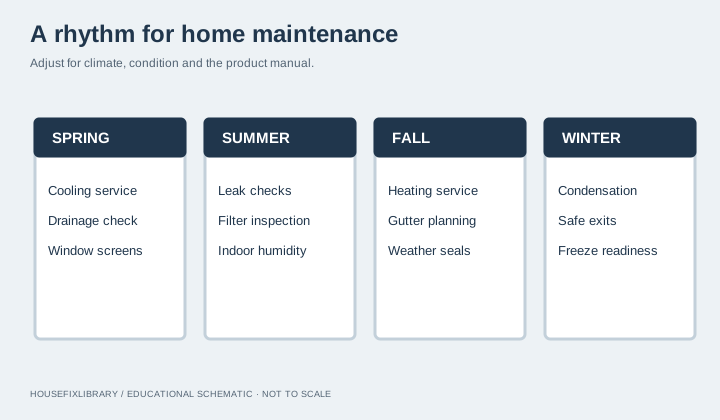
Steps and safe checks
1. Review winter damage
Walk accessible ground and note gutter displacement, ponding, damaged walking surfaces or new staining. Photograph changes and compare them with earlier records rather than assuming every mark is recent.
2. Prepare cooling equipment
Arrange professional pre-season service when appropriate. Check the user-accessible filter with the normal shutdown procedure and keep intended airflow routes clear. Leave refrigerant, electrical and internal equipment work to a technician.
3. Check windows and water connections
Inspect accessible tracks and weather seals using the window instructions. When outdoor water service is restored, follow the faucet procedure and observe for leaks without entering unsafe spaces.
4. Update the household plan
Test alarms on their schedule, check emergency contacts and review tasks that need professional help. Put follow-up appointments in the maintenance calendar rather than treating the first inspection as a completed repair.
Check the result
The result should be a prioritized list with completed checks separated from unresolved defects. A seasonal checklist is not a building inspection certificate.
Common mistakes
Avoid turning every observation into a DIY repair or booking annual work solely because a calendar says so without checking the equipment instructions.
When to call a professional
Use qualified help for roof access, drainage defects, structural changes, unsafe electrics and equipment servicing.
What can happen if you postpone it?
Winter damage and blocked drainage may go unnoticed until the next heavy rain. A brief safe inspection helps separate routine care from work needing assessment.
Prevent a repeat
Keep dated records and repeat relevant observations after rain or system startup. Adapt the checklist to local weather and your home’s specific systems.
Sources and scope
- ENERGY STAR: Maintenance Checklist
- FEMA National Flood Insurance Program: Minimize Flood Damage
- US Fire Administration: Smoke Alarms
Source check: November 4, 2026. AI-assisted educational writing checked against the linked documentation; no firsthand testing or licensed professional review is claimed. Manufacturer instructions and applicable local requirements take priority.