
Outdoor water connections are vulnerable when retained water freezes. The correct preparation depends on whether the faucet has an indoor isolation valve, an automatic drain or another design. A foam cover is not a substitute for understanding the system.
In this guide
Tools and preparation
- Faucet.
- Plumbing instructions.
- A label.
- Safe access to any confirmed homeowner shutoff.
Time is a planning estimate, not a timed field test. Material prices vary; check the correct parts and local prices before buying.
Steps and safe checks
1. Remove attached accessories
Before freezing conditions, disconnect hoses and accessories as the faucet maker directs. Drain and store hoses. Leaving an attachment connected can prevent some frost-resistant faucets from draining properly.
2. Identify the winterizing arrangement
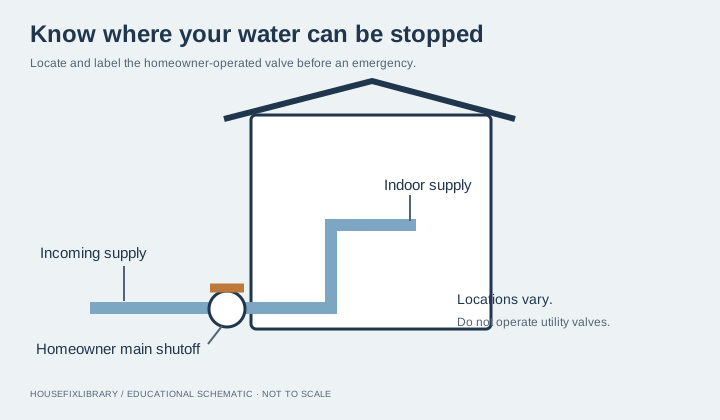
Find the model instructions and any confirmed indoor shutoff for the outdoor line. Do not confuse a nearby valve with the correct supply. A plumber can identify an unfamiliar arrangement.
3. Follow the specified drain procedure
Use the exact isolation and drainage steps for that faucet and system. Red Cross advice addresses conventional hose bibs with indoor valves, but specialized designs may differ. Do not invent a procedure from the handle’s appearance.
4. Record and check condition
Label the correct valve and note the seasonal setting. Look for leakage after the procedure. If a valve leaks or will not operate gently, arrange service rather than applying extra force.
Check the result
The connection should be prepared according to its actual design, with no continuing leak. If drainage is uncertain, ask a plumber before freezing weather arrives.
Common mistakes
Avoid leaving hoses connected, assuming “frost-free” means maintenance-free or adding antifreeze to drinking-water plumbing.
When to call a professional
Use a plumber for inaccessible valves, uncertain drainage, frozen or burst pipes, or a faucet that leaks inside the wall.
What can happen if you postpone it?
Water trapped in a frost-exposed faucet or attached hose can freeze. The correct preparation depends on the installation and should be completed before cold conditions.
Prevent a repeat
Keep the model and winterizing instructions in your calendar notes. In spring, observe for leaks when returning the system to service.
Sources and scope
Source check: November 4, 2026. AI-assisted educational writing checked against the linked documentation; no firsthand testing or licensed professional review is claimed. Manufacturer instructions and applicable local requirements take priority.