
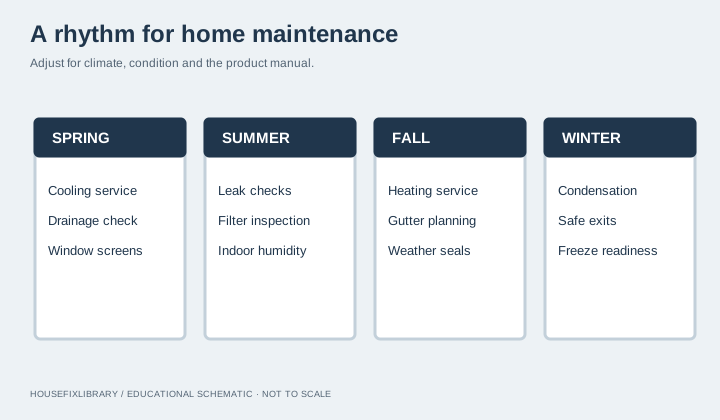
A routine works best when it is small enough to repeat. Monthly observation can help catch changes, but not every component needs monthly replacement. Follow the model’s instructions and use this checklist to organize attention, not to invent a universal service interval.
In this guide
Tools and preparation
- A notebook.
- Calendar.
- Flashlight.
- Accessible alarm.
- HVAC manuals.
Keep repair records in one place.
Time is a planning estimate, not a timed field test. Material prices vary; check the correct parts and local prices before buying.
Steps and safe checks
1. Test alarms
Use the smoke and CO alarm test procedures and record problems. Check replacement dates when maintaining the units. Follow the separate alarm guides for an emergency signal, a low battery or an end-of-life indication.
2. Inspect the accessible filter
ENERGY STAR recommends checking HVAC filters monthly. Follow the shutdown and access instructions, then clean or replace only as the filter and equipment require. Record the correct size and permitted type.
3. Look for visible water changes
Check accessible areas beneath sinks, around toilets and near appliance connections for fresh dampness or staining. Do not move heavy appliances alone or loosen fittings merely to inspect them.
4. Review outstanding work
Update unresolved symptoms, booked service and seasonal tasks. Keep the path to exits and confirmed shutoffs clear. Download calendar reminders if helpful, and add the model-specific tasks that apply to your home.
Check the result
A completed checklist should show what was actually checked and which defects still need attention. Blank or inaccessible items should remain open rather than being marked complete.
Common mistakes
Avoid replacing every filter automatically on a calendar date, ignoring intermittent leaks or making repeated cosmetic repairs without checking why a symptom returns.
When to call a professional
Refer electrical, gas, structural and hazardous-material issues to qualified professionals. Arrange service when a routine check reveals an unresolved problem.
What can happen if you postpone it?
A missed routine can let a small visible change go unrecorded. Monthly checks help identify new symptoms; they do not certify that concealed systems are safe.
Prevent a repeat
Keep the routine brief, adjust it after equipment changes and retain dated records. The maintenance tool saves checkmarks locally and can export a calendar without creating server jobs.
Sources and scope
- US Fire Administration: Smoke Alarms
- Consumer Product Safety Commission: Carbon Monoxide Fact Sheet
- ENERGY STAR: Maintenance Checklist
- EPA WaterSense: Home Maintenance
Source check: November 4, 2026. AI-assisted educational writing checked against the linked documentation; no firsthand testing or licensed professional review is claimed. Manufacturer instructions and applicable local requirements take priority.