
Anchor performance depends on the base material, thickness, condition and how the load acts on it. A shelf projecting from the wall creates different forces from a flat picture. Laboratory maximum load figures should not be mistaken for a guaranteed working load in your home.
In this guide
Tools and preparation
- Wall.
- Fixture information.
- Anchor instructions.
- A scale or reliable item weight.
- An assessment of concealed services.
Time is a planning estimate, not a timed field test. Material prices vary; check the correct parts and local prices before buying.
Steps and safe checks
1. Identify the support material
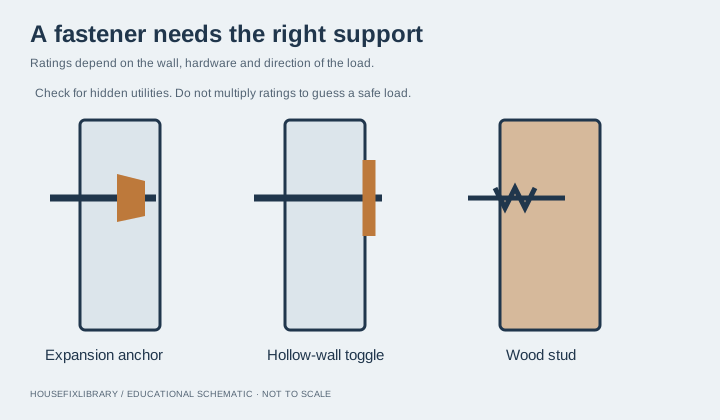
Distinguish drywall, masonry, plaster and a structural stud using reliable information. Do not select an anchor from wall appearance alone or assume a stud finder proves an area is free of electrical or plumbing services.
2. Understand the load
Include the object, its contents and any movement. A pivoting bracket or deep shelf increases leverage. Children pulling on furniture or fixtures can create forces beyond a simple static weight.
3. Read the complete rating
Check the anchor’s permitted wall thickness, screw size, cavity clearance and stated working-load guidance. TOGGLER distinguishes ultimate test loads from recommended working loads and notes limits for loads projecting from the wall.
4. Match the installation system
Follow both the fixture and anchor instructions. Do not multiply one anchor’s rating by the number of fixings to invent a safe capacity. Use professional advice where the wall or loading is uncertain.
Check the result
A suitable choice has documented compatibility with the wall, fixture and intended use. It is not established merely because a screw feels tight.
Common mistakes
Avoid oversizing a hole, using an incorrect bolt, tightening until drywall crushes or treating every plastic anchor as suitable for hollow walls.
When to call a professional
Use qualified help for heavy cabinets, grab bars, overhead loads, televisions on extending arms or any fixing whose failure could seriously injure someone.
What can happen if you postpone it?
An unsuitable anchor can release a fixture and damage the wall or injure someone. The package load figure applies only to its stated substrate and installation.
Prevent a repeat
Keep the fixing instructions and respect the original load limit. Reassess when adding contents or changing a bracket’s position.
Sources and scope
Source check: November 4, 2026. AI-assisted educational writing checked against the linked documentation; no firsthand testing or licensed professional review is claimed. Manufacturer instructions and applicable local requirements take priority.