
Gutters collect roof runoff and direct it toward downspouts. Overflow can reflect debris, a damaged joint, poor alignment or inadequate capacity. The location and conditions of overflow help a contractor choose the repair.
In this guide
Tools and preparation
- Binoculars if useful.
- Camera.
- Notes.
Observe from a safe location during light rain only if weather conditions allow.
Time is a planning estimate, not a timed field test. Material prices vary; check the correct parts and local prices before buying.
Steps and safe checks
1. Inspect in dry weather
Walk around accessible ground and look for sagging sections, detached brackets, staining and obvious plant growth. Stay clear of loose gutters and avoid areas with unsafe footing.
2. Observe safe rain conditions
If safe, note where water spills over or escapes a joint during ordinary rain. Do not remain outdoors during lightning or strong winds. Photograph from shelter rather than approaching a hazardous edge.
3. Follow the downspout route
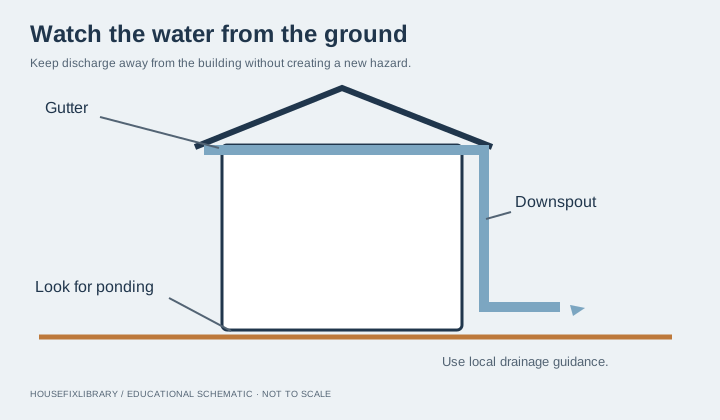
Look for disconnected sections and water discharging against the building or across a walking route. Check accessible outlets for debris without opening buried drains or reaching into hidden cavities.
4. Arrange suitable maintenance
Give the observations to a qualified gutter service. Ask them to inspect condition and discharge as well as remove debris. Cleaning alone may not correct sagging, leakage or a badly routed outlet.
Check the result
After maintenance, observe another suitable rain event from safe ground. Look for controlled flow without the earlier overflow or new ponding.
Common mistakes
Avoid using roof access as a routine homeowner check, leaning a ladder against a weak gutter or assuming a gutter guard eliminates maintenance.
When to call a professional
Use a competent insured service for high access, loose components, roof-edge repairs and persistent overflow. Damaged fascia or roof structure needs appropriate assessment.
What can happen if you postpone it?
Gutter overflow can wet fascia, walls or the ground beside the home. Ground observations help locate the problem before arranging safe cleaning or repair.
Prevent a repeat
Schedule checks around local leaf fall and severe weather. Keep notes on repeated trouble spots instead of treating each overflow as an unrelated event.
Sources and scope
- FEMA National Flood Insurance Program: Minimize Flood Damage
- American Red Cross: Preventing Frozen Pipes
Source check: November 4, 2026. AI-assisted educational writing checked against the linked documentation; no firsthand testing or licensed professional review is claimed. Manufacturer instructions and applicable local requirements take priority.