
One uncomfortable room may have blocked airflow, a local duct issue or heat gain unrelated to the register. A whole-house change suggests a broader problem. Useful observations can prevent a guesswork repair.
In this guide
Tools and preparation
- Flashlight.
- Soft brush or suitable vacuum attachment.
- The HVAC user instructions.
Time is a planning estimate, not a timed field test. Material prices vary; check the correct parts and local prices before buying.
Steps and safe checks
1. Compare several rooms
Note whether airflow is weak everywhere or at one outlet. Compare under the same operating mode. Record when the issue occurs and whether doors, furniture or recent renovations changed the room.
2. Clear external obstructions
Move ordinary furniture or curtains away from supply and return openings without creating another hazard. Check that an adjustable register is in its intended position. Do not remove fixed ventilation grilles indiscriminately.
3. Inspect the accessible filter
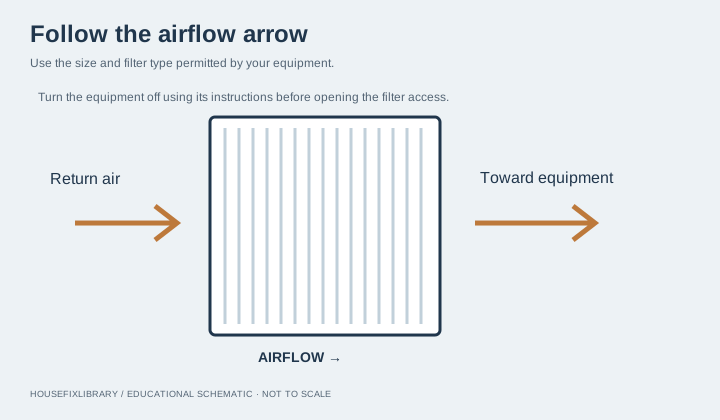
Follow the separate filter guide and equipment instructions. A visibly dirty or incorrect filter can contribute to restricted flow, but replacing it does not rule out other faults.
4. Clean only the accessible surface
With the system off as instructed, remove dust from an accessible grille using an appropriate attachment. Keep objects and liquids out of the duct. Observe performance after restoring normal operation.
Check the result
Improvement after removing an obstruction identifies a useful change. Continuing imbalance may need airflow measurement and equipment or duct assessment.
Common mistakes
Avoid spraying fragrance or disinfectant into ducts, pushing tools down the opening or using a high-resistance filter without approval.
When to call a professional
Use an HVAC contractor for persistent imbalance, damaged ducts, unusual noise, icing, suspect contamination or weak airflow throughout the house.
What can happen if you postpone it?
An obstructed register can make a room uncomfortable. Blocking other registers to force air toward it may worsen system balance instead of finding the original fault.
Prevent a repeat
Keep returns unobstructed, check filters and include airflow changes in your pre-season service notes.
Sources and scope
Source check: November 4, 2026. AI-assisted educational writing checked against the linked documentation; no firsthand testing or licensed professional review is claimed. Manufacturer instructions and applicable local requirements take priority.