
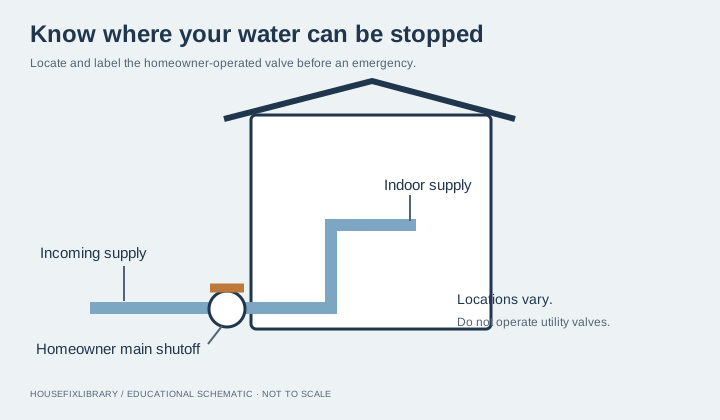
There may be a main homeowner water valve and smaller shutoffs at individual fixtures. Their locations differ by climate, property type and supply arrangement. The useful result is a clear, safe plan, not a guess about which handle controls the water.
In this guide
Tools and preparation
- Flashlight.
- Labels.
- Notebook.
- Building or utility records.
Tenants should involve the property manager.
Time is a planning estimate, not a timed field test. Material prices vary; check the correct parts and local prices before buying.
Steps and safe checks
1. Trace the accessible supply
Look where the incoming water line enters an accessible basement, utility area or garage. Consult plans or the utility if the route is unclear. Apartment supplies may be managed centrally and should not be operated without permission.
2. Identify ownership and function
Distinguish the homeowner valve from a meter, pressure regulator, fire-sprinkler supply or utility-controlled valve. A photograph and a label are helpful only after the function is confirmed.
3. Check condition visually
Look for corrosion, staining, dampness or a damaged handle. Do not turn a questionable valve just to test it. Arrange replacement or servicing before you need to rely on it in an emergency.
4. Write a household plan
Record the location and who to call. Have a plumber demonstrate operation if needed. Make sure adults know when a water leak also creates an electrical hazard and requires staying clear.
Check the result
You should be able to explain which valve is yours, reach it safely and find the emergency contact. An untested or stiff valve should be recorded as needing service.
Common mistakes
Do not assume that a nearby valve stops the entire property or that every quarter-turn handle is installed in the same orientation. Avoid hanging heavy labels on fragile piping.
When to call a professional
Ask the utility or a plumber to identify uncertain valves, shared supplies, well controls, fire systems and inaccessible or deteriorated shutoffs.
What can happen if you postpone it?
A missing or inaccessible shutoff label can delay the response to a leak. Finding a seized valve during calm conditions gives you time to arrange replacement.
Prevent a repeat
Keep the access clear and update the plan after plumbing changes. Recheck visually during leak inspections; follow professional advice about exercising an older valve.
Sources and scope
Source check: November 4, 2026. AI-assisted educational writing checked against the linked documentation; no firsthand testing or licensed professional review is claimed. Manufacturer instructions and applicable local requirements take priority.