
A running toilet can lose water through the flush seal or continue filling past its intended level. Listening alone will not tell you which part is faulty. Observe a complete fill cycle and the water’s route before adjusting anything.
In this guide
Tools and preparation
- Flashlight.
- Towel.
- Food coloring.
- The toilet model instructions.
Set the tank lid on a padded, stable surface.
Time is a planning estimate, not a timed field test. Material prices vary; check the correct parts and local prices before buying.
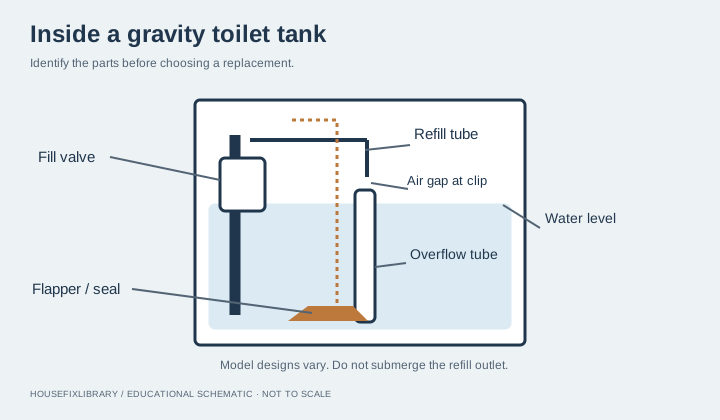
Steps and safe checks
1. Watch one fill cycle
Remove the lid carefully. Flush once and watch the fill valve, chain and overflow opening. Check whether the handle returns and whether a tangled chain holds the flapper above its seat.
2. Look at the overflow
After filling should have stopped, look for water entering the overflow tube. Compare the level with the manufacturer’s mark. This points toward a fill-control or level problem, not automatically a bad flapper.
3. Check for a seal leak
If water is not overtopping the tube, put a few drops of food coloring into the tank. Wait 10 minutes without flushing. Color in the bowl indicates a tank-to-bowl leak. Flush afterward to limit staining.
4. Match the next step to the result
A snagged chain may be freed without changing parts. A worn flapper needs the correct model-compatible replacement. Follow the valve’s own adjustment instructions for water-level problems; there is no universal screw setting.
Check the result
After a change, let the tank refill, listen for continued flow and repeat the leak check. Water should stop at the specified level and the handle should return freely.
Common mistakes
Replacing the fill valve before checking the seal can leave the leak unchanged. Do not push a refill tube below the waterline or apply sealant to a flapper seat.
When to call a professional
Call a plumber if the valve will not shut off, the tank leaks externally, the correct adjustment does not stop overflow, or the system differs from a gravity tank.
What can happen if you postpone it?
A running toilet can waste water between uses. A new flapper will not cure water continually entering the overflow, so identify the route before buying a part.
Prevent a repeat
Keep in-tank cleaning products out unless the toilet and component manufacturers explicitly allow them. Include a leak check in your household maintenance routine.
Sources and scope
Source check: November 4, 2026. AI-assisted educational writing checked against the linked documentation; no firsthand testing or licensed professional review is claimed. Manufacturer instructions and applicable local requirements take priority.