
Choose the patch method before buying compound. This guide covers a small, dry, non-rated interior wall, not a wet ceiling or fire-resistance repair.
Tools and materials
- Tape measure and pencil
- Patch system or matching drywall specified for the opening
- Compatible joint compound and the required tape
- Taping knife and surface protection
- Eye protection and dust protection specified for the materials
- Abrasive grade specified by the compound maker; do not assume coarse paper is suitable
Time is a planning estimate. It excludes professional repairs, drying and replacement parts unless specified.
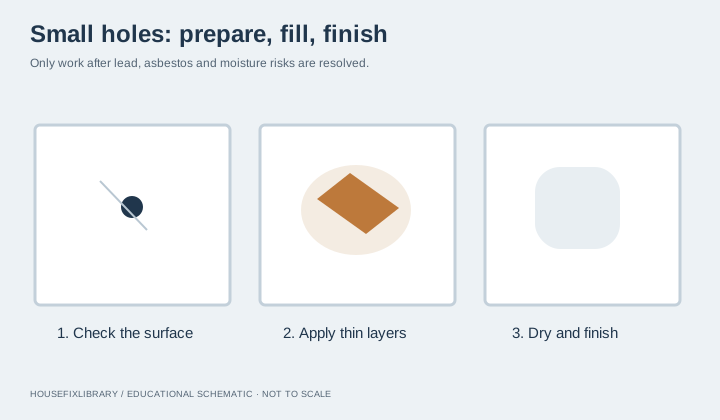
Step-by-step checks
1. Measure sound material
Measure the damaged area rather than only the visible opening. Soft, damp or loose board needs investigation before cosmetic work. Record board thickness and whether the wall has a special rating.
2. Choose one complete repair system
A rated mesh kit, a supported drywall insert and a paper-faced patch each have their own size and substrate limits. Read the selected system instructions all the way through. A larger opening may need backing or clips rather than a surface bridge.
3. Fit without hidden-service damage
Only proceed after concealed services are resolved. Prepare the opening and fit the patch exactly as its manufacturer directs. Do not blindly push a saw or long screw into the cavity. Keep the patch face flush and its edges supported as required.
4. Build thin finishing coats
Embed the specified tape or paper edge in compatible compound. Let each coat dry as directed before the next coat. Feather the edges, sand lightly with appropriate dust control, then prime and paint. Do not fill the entire void with a thick lump of spackle.
Check the result
Inspect in side light for proud edges or cracks after drying. A patch that moves, stays damp or cracks again needs its cause reassessed.
What can happen if you postpone it?
A dry cosmetic hole does not automatically become a structural emergency. An unresolved leak or moving substrate changes the priority and can ruin a new patch.
When to call a professional
Use a qualified contractor for rated walls, overhead repairs, uncertain wiring/pipes, repeated movement or hazardous coatings.
Keep a useful record
Write down the model, date, observations and next action. Save a photograph only from a safe position. Keep service invoices with your household records so the next check has a clear comparison.
Add this to your maintenance plan · Read related questions
Sources and scope
Sources checked November 5, 2026. AI-assisted educational writing; no field test or licensed professional review is claimed. Model instructions and local requirements take priority.