
Prepare this reference during normal conditions. Confirm locations with the utility, landlord or a qualified tradesperson. Do not label an unknown valve by guessing.
Main water: identify the household valve
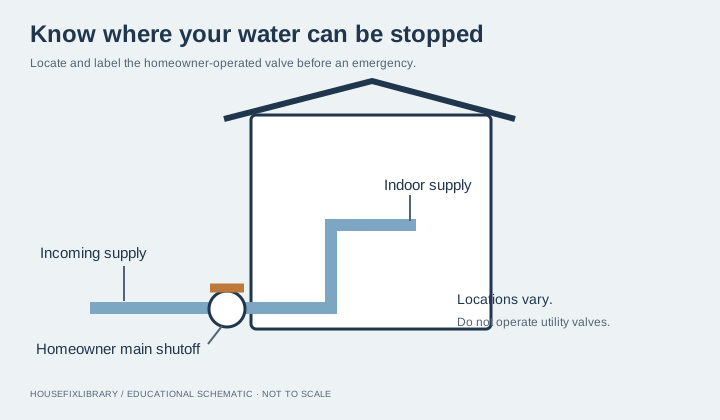
- Look near the supply entry or ask the utility/landlord. Distinguish domestic water from fire-sprinkler and shared supplies.
- A known quarter-turn water ball valve normally closes with its handle across the pipe; a wheel valve normally turns clockwise. Use gentle hand pressure only.
- Do not force a stuck valve or operate a utility street valve without permission and instructions.
- If the route is flooded or near unsafe wiring, stay clear and call for help.
Gas: prepare now, evacuate if you smell it
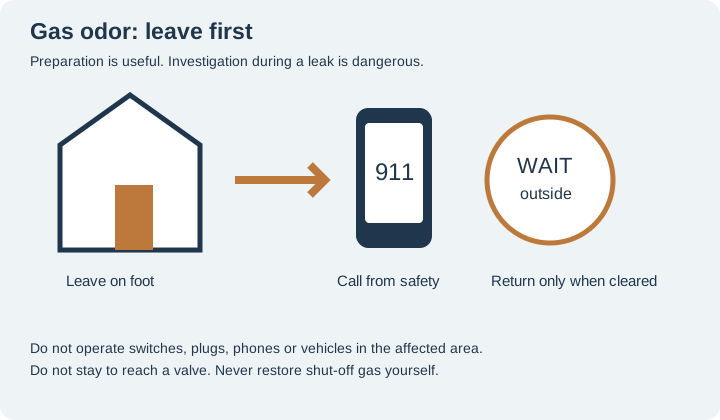
Ask your gas utility to identify the service shutoff and explain its local emergency procedure before an incident. Common meter valves use a quarter-turn tang, but layouts vary and a generic picture cannot identify your valve.
If gas is suspected, leave immediately without operating switches or using a phone in the affected area. Do not remain to reach a valve. Call 911 and the utility from well away. Only operate a gas shutoff if the utility or responders specifically direct you and it is safe. After service is shut off, do not turn it back on yourself.
PHMSA emergency guidance · PG&E meter-shutoff and restoration guidance
Electricity: labels, safe access and intact covers
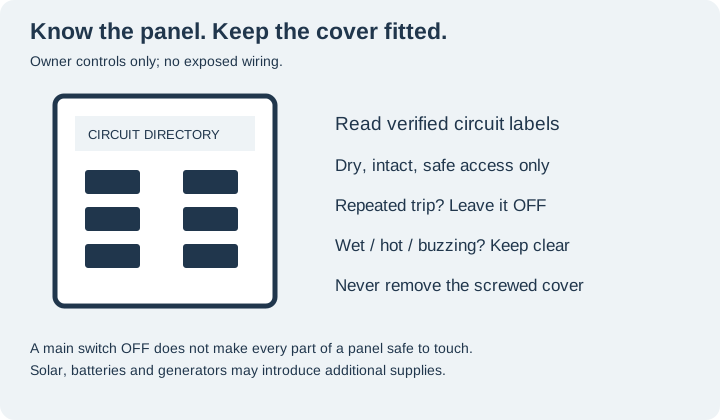
Locate the normal user-access door and circuit directory during normal conditions. Have missing or uncertain circuit labels verified by an electrician. Do not remove the screwed cover or reach into the panel. Parts may remain energized even with a main switch off, especially with solar, batteries or a generator.
Operate only a known, intact breaker from dry, safe access and according to its instructions. Water, heat, buzzing, arcing, smoke or damage means keep clear. If a breaker trips again after one appropriate reset, leave it off and get help.
Resetting a breaker: the limits · ESFI fuse and breaker guidance
Write your household reference
Print and fill these in privately. Do not post access details in public Q&A.
- Household water valve: ______________________________
- Gas utility emergency number: ________________________
- Panel location / electrician: __________________________
- Landlord or building manager: _________________________
- Safe meeting place: __________________________________